








Some 40 million mattresses are discarded each year in Europe alone, with the majority ending up as landfill. This creates the equivalent of 600 kilotons of waste, which includes more than 300 kilotons of polyurethane (PU) foam. This is the result of the latest EUROPUR (European Association of Flexible Polyurethane Foam Blocks Manufacturers) report.
Evonik wants to help change this with a project to establish a recycling process for flexible polyurethane foams. The goal of the project is to break down used mattresses into their chemical components and make them recyclable.
A pioneering efficient polyurethane mattress recycling process
Evonik is working on a hydrolysis recycling process that offers a route to obtaining a high-quality recycled polyol – a main building block for polyurethane foams – which can be used at significantly higher levels compared with existing commercialised technologies. Furthermore, The Vita Group and Evonik have continued their partnership to develop an efficient chemical recycling process to convert flexible PU foams back into their original polyol raw material.
Environmentally friendly production processes and end products are increasingly becoming a decisive factor for flexible foam producers. Therefore, it is key to recycle products back to their raw materials and reusing them repeatedly to enable a fully circular economy. Evonik’s hydrolysis process has the potential to produce recycled material that provides an alternative to virgin raw material in both quality and performance. Thus, helping foam producers to meet their own sustainability targets, while continuing to deliver high-quality PU products.
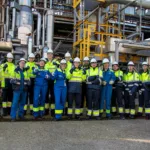
At Evonik, the recycling project now resembles a huge mosaic that is being worked on in parallel at several locations and with different functions.